Tone and Voice Enforcement Across Multi-Agent AI Pipelines
Persistent brand context layers enforce consistent tone across AI agents without prompting alone.
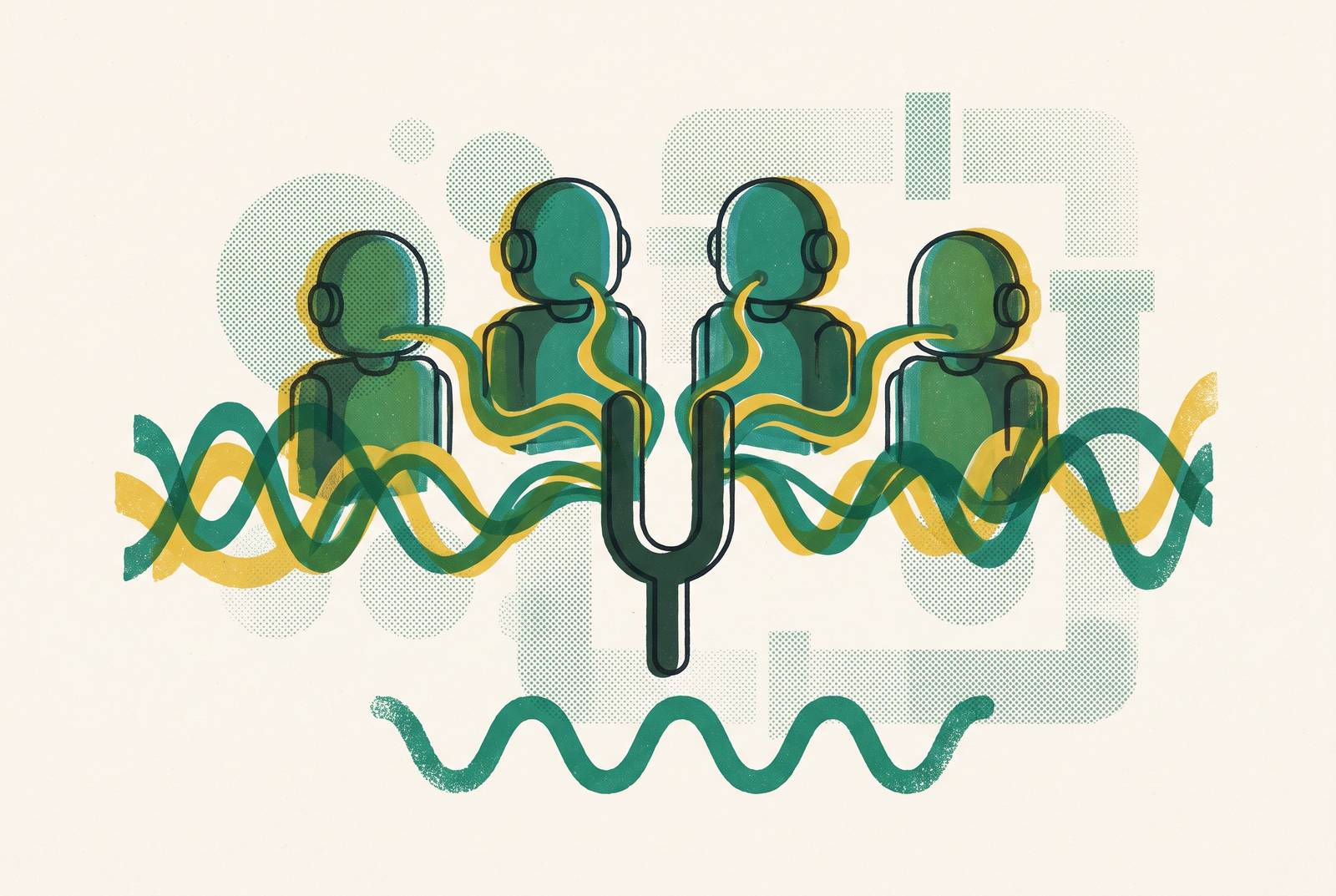
Tone and voice enforcement across multi-agent AI pipelines requires shared brand context. To detect when AI output drifts off-brand, it must be checked against explicit voice constraints, claim boundaries, and a brand-specific scoring rubric before it is published. A persistent, versioned context layer gives every agent the same rules, and blocking checks and advisory feedback put those rules to work.
Why tone and voice drift in multi-agent pipelines is not a prompting problem
At a handoff, the next agent starts from its own context window. Voice rules from the previous prompt may be abbreviated, reinterpreted, or dropped while the task itself moves forward. The receiving agent then works from an altered starting point, and its output becomes the next agent’s input. Drift builds up through the chain, spreading beyond a single error in a draft.
A longer system prompt cannot repair that missing continuity. Prompts are per-run instructions. An agent optimized for resolution speed can therefore produce interactions that conflict with a brand’s commitments to empathy and relationship-building, even while completing its assigned task. Compliance with NIST and ISO 42001 does not replace a distinct layer of identity governance.
The more content a brand produces, the more this weakness costs. A high-performing consumer brand ships hundreds of ad creatives per month across Meta, Google, TikTok, LinkedIn, and its website. Without structured brand context, that output can accumulate off-tone copy, stretched logos, and inconsistent palettes.
Why voice rules written for humans cannot be enforced by machines
A brand guidelines PDF describes expectations for human readers, but it does not by itself provide constraints an agent can query and enforce during generation. Detail alone does not close that gap. “Confident and concise” becomes testable only when translated into rules such as an average sentence-length limit, restrictions on hedging verbs, and consistent use of first or second person. That translation changes a preference into a policy.
Not every voice attribute reduces to a banned-word check. Empathy needs a brand-specific rubric, while vocabulary restrictions can be evaluated directly. Both belong in a single machine-readable specification so that generation and review apply the same standard. BrandCodex describes its MRBS specification as structured JSON and YAML files covering colors, typography, voice guidelines, and constraints, queryable through API and MCP access.
Uncertainty, errors, refusals, and escalation to a human require explicit patterns. Otherwise, agents can default to cheerful certainty when the context calls for conservative, precise language. Safety constraints and refusal style belong at the system or policy layer, and tone traits, templates, and UI copy each need rules encoded for them. A detailed guide remains useful background, but it is not a substitute for these operational definitions.
Where drift enters a pipeline and which stages must carry the enforcement
Drift can begin before a draft exists. Topic selection needs a defined point of view and claim boundaries, because an off-brand angle cannot be repaired merely by changing adjectives. Brief generation then needs section structure and an allowed lexicon. Checks on drafts must catch banned terms, passive voice where it is banned, and shifts in person.
QA needs an explicit minimum passing score. Without one, a review can find weaknesses but cannot say whether the asset can move on. The enhancement layer must then apply rhythm changes, schema, and metadata without overriding voice constraints. Before an asset is published, it needs a final policy check because changes made after an earlier check can still affect it.
A rule belongs where it costs least to fix the error. Applying a point-of-view constraint when choosing topics saves editors from fixing every draft that follows. Tracking drift incidents by stage exposes recurring failures, which can then become codified rules. In multi-site and multi-agent operations, this also prevents each property from gradually developing its own interpretation of the brand.
Not every finding should stop the pipeline. Blockers fail the QA gate and trigger improvement loops, including when a banned claim appears or readability exceeds the permitted limit. Advisors suggest changes to rhythm and other ways to phrase the text without blocking publication. If every suggestion blocks publication, teams have a reason to bypass the system, but if all enforcement is advisory, critical drift can ship. The split preserves throughput without making essential rules optional.
Why a shared context layer is the architectural fix — and what it must contain
Stage-level enforcement needs a common source of authority. If each agent maintains a separate copy of definitions, voice rules, and prohibited language, those copies can diverge as prompts and agents change. A persistent shared context layer removes that source of disagreement. Every stage queries the same brand specification instead of inheriting whatever guidance survived the previous handoff.
This is a context assembly problem. Agents combine system instructions, user messages, retrieved documents, tool outputs, memory, and other agents’ contributions. The runtime process determines which material enters the model’s context, its priority, and its trust boundary. Brand constraints must therefore function as system-level rules.
The shared layer needs both voice and identity. It contains sentence-length limits, banned terms, person rules, and hedging restrictions, together with visual tokens for colors, typography, and logo use. Positioning and claim boundaries define what the brand asserts and what it does not. Channel and persona presets supply the appropriate register for an executive email, in-product tooltip, support reply, or social post without requiring fresh instructions in every prompt.
Version history makes that shared authority maintainable. Human domain experts approve changes, while AI stewards enrich the context continuously. The layer is versioned like code, so a rule change is a commit that connected agents use. An asset repository alone does not meet this requirement because the rules must be accessible during generation. With that access, corrections can reinforce subsequent stages instead of forcing each agent to recover the brand independently.
How MCP makes a shared brand context layer queryable by every agent in the pipeline
MCP provides a standard route to the shared layer. Anthropic open-sourced MCP on November 25, 2024, and by 2026 its ecosystem covers Claude, ChatGPT, Cursor, Visual Studio Code, MCPJam, and agent frameworks. Compatible agents can retrieve voice constraints, positioning, and prohibited patterns at query time. That replaces reliance on training-data recall with access to the brand’s actual specification.
Retrieval and enforcement remain separate responsibilities, however. MCP connects agents to tools and context, but it does not decide whether a phrase violates a brand rule or whether a failed check should block publication. Those decisions belong to the structured constraints and governance policy exposed through the connection.
For agencies, per-brand isolation is an essential requirement. A multi-tenant brand context server can keep each client’s voice rules, visual identity, and knowledge base separate and give compatible agents access through the same protocol. That architecture avoids manually rewriting context for each client workflow. Publishing remains a separate function, so the context layer must be paired with a content workspace to manage calendars and scheduled posts.
How AI-generated creative across copy, image, and video can draw from the same brand context
The same source can govern more than text. Copy generation draws on clarity, formality, empathy, jargon limits, and inclusive-language rules, while image and video workflows draw on visual identity tokens and references. Hard constraints need to be part of generation workflows as well as later review. Shared context keeps voice and visual identity together even when different tools make each asset.
Adobe Firefly’s Style Kits illustrate reusable visual guidance. They let a brand save and share reference images and fixed generation settings, including effects, prompts, and style parameters, so collaborators do not have to specify the style again for every variation. Style Kits are not model fine-tuning. Firefly’s Custom Models offer model fine-tuning, and FLUX, developed by Black Forest Labs, supports fine-tuning workflows for technical teams that use client brand assets.
Video adds performance to the same identity problem. Runway’s Act Two transfers human performance onto a character, including an AI-generated one, enabling branded character and avatar animation. That function is distinct from preserving a campaign’s lighting, color grading, and composition through style references. Shared brand context sets the identity the output should have, and the generation tool provides the means to create it.
Wireflow documents a workflow that connects these inputs directly. A text node captures product, tone, format, and brand constraints, then feeds both a Hero Ad Image node and a Compose Video node. Each workflow exposes a REST API endpoint and an MCP tool for agent-to-agent calls. This makes shared context available at the creative generation step rather than leaving each medium to reconstruct the brief.
How to detect when AI-generated output drifts off-brand before it ships
Detection requires comparing finished output with the brand’s own rules. Generic readability can flag prose that is hard to read, but it cannot tell whether the work has the intended personality or follows the brand’s positioning. A full review needs both rule checks and checks against a rubric. Each finding needs evidence so that an editor can understand what failed and why.
The Voice Alignment Score evaluates tone, formality, clarity, empathy, and inclusivity as a weighted index against the brand’s rubric. Brand Personality Adherence measures the pass rate for named attributes such as Bold, Helpful, and Expert. Separate compliance checks look for banned terms, sensitive claims, and inclusive-language issues. These criteria distinguish a measurable departure from a reviewer’s personal preference.
Editors also need a record of proposed changes. Before-and-after diffs with a rationale for each change let them accept, modify, or reject revisions with context. Blocking findings prevent publication, while advisory findings remain available in the enhancement layer without stopping cadence. A governance dashboard tracks tone match, pass rates, and edit-cycle reduction over time, making voice consistency visible as a product metric.
Review must feed the shared layer as well. When banned terms or phrasing patterns that fail the rubric keep appearing, they can prompt changes to the rules so that editors no longer have to fix them by hand each time. Once a human approves those findings, they become shared constraints that every connected agent can use. For multi-brand operators, each review uses that client’s rubric and policy, and per-brand isolation keeps a generic standard from taking the place of each brand’s identity.
What changes when brand context is treated as infrastructure rather than documentation
In a document-led workflow, editors detect drift after generation, so additional output creates more rework and more pressure on review capacity. With shared constraints, agents get brand rules during generation and reviewers check the exceptions that are left.
That shift also changes who maintains brand consistency. Domain experts remain responsible for approving identity and policy, but their decisions become versioned inputs available across the workflow. For agencies, adding a brand means adding isolated, queryable context. The infrastructure supports distinct identities without requiring a separate enforcement architecture for each one.
This model is not limited to engineering-heavy enterprises. MCP-based brand context platforms can be configured without engineering, using a website, brand guide, or files to establish the context and the standard protocol to connect agents. The organizational requirement remains clear ownership of that context and its updates. The decisive questions are where the brand context lives, who keeps it current, and whether every agent can query it when the work is generated.