What Brand Infrastructure Means for AI-Native Teams
Agents need machine-readable brand rules, not PDF guides, to stay on-brand at scale.

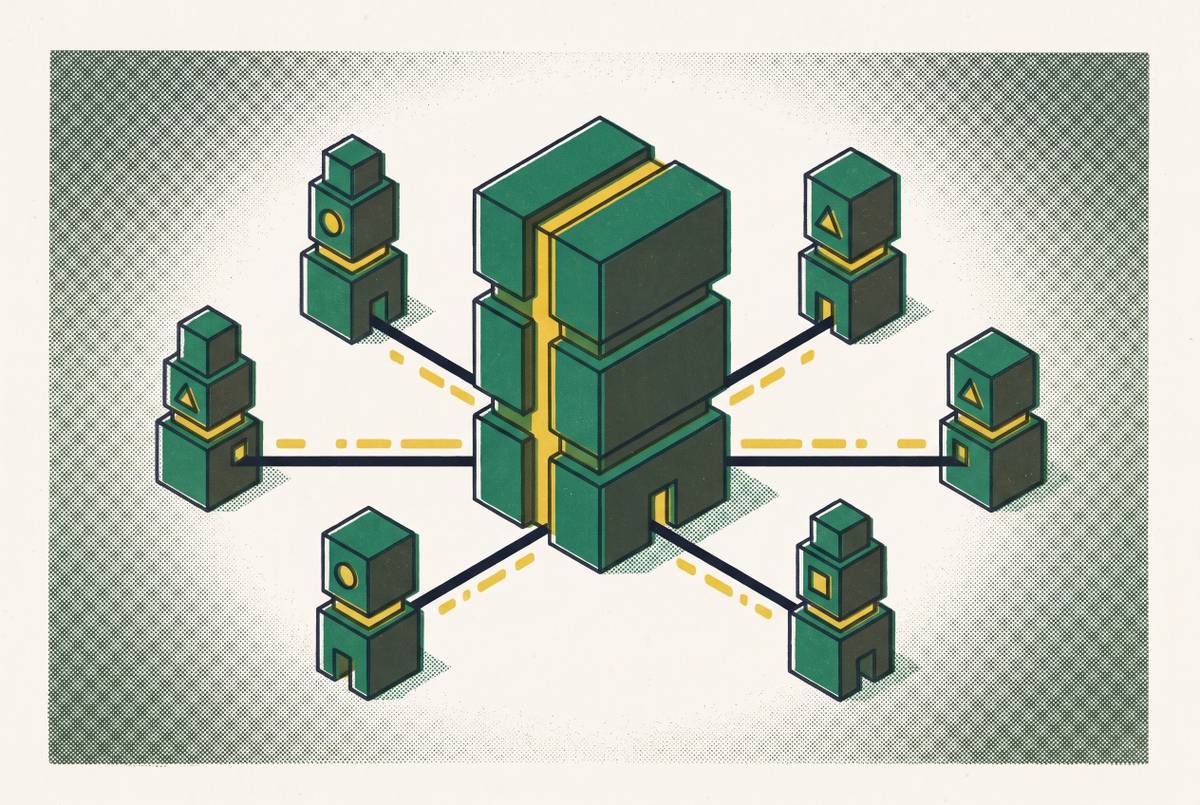
The brand layer for agents is shared infrastructure that makes brand identity machine-readable, versioned, and persistently available to every agent producing output. For AI-native teams to stay on brand without people having to prompt them all the time, they need a shared source of rules and a review step before work ships. A PDF brand guide supplies information, but it does not provide that architecture.
Why brand guidelines fail AI agents even when they work perfectly for humans
A brand guide as an artifact depends on its reader, while a brand guide as infrastructure must work without that reader’s interpretation. A human can read “friendly but premium” and apply judgment to a particular piece of copy. An agent receiving the same phrase has no explicit rule that settles a choice of words or sentence structure. It can produce an interpretation, but the guide does not give it a concrete standard against which to test that choice.
That mismatch requires changes to information architecture. The guide may contain sound brand thinking while withholding the machine-addressable rules agents need. Colors must be available as exact hex values, voice as explicit instructions, and imagery guidance as labeled examples. The document’s usefulness depends on someone translating it each time.
What it means for AI to treat brand as infrastructure rather than as an input
Brand infrastructure means identity, visual rules, voice, and asset guidance expressed in machine-readable form, served from a single source, versioned so changes propagate, and used to review outputs. Its defining properties are persistence, shared access, queryability, and versioning. These properties distinguish an operational dependency from a document attached to a task. The brand lives outside any one agent, and each connected agent calls that source before it creates work.
By contrast, a PDF passed into a prompt is an input for one agent in one session. That attachment does not itself establish shared access, propagate later changes, or enforce compliance. Attaching it elsewhere makes another local copy where a shared dependency is needed. Even when both approaches start with exactly the same guide, they differ architecturally.
Code infrastructure provides a useful comparison. A shared library, a config file, or a versioned API gives dependent systems a common reference. A printed manual leaves each developer to read it, remember it, and decide how to use what it says.
How context engineering explains why brand context breaks at scale
As agent systems grow, engineers must shift from writing better prompts to controlling what information each agent sees. Tool definitions, conversation history, and data from multiple sources compete for space in the context window. Brand guidance has to fit into that same crowded space, with no special protection. Even with the guidance in a prompt, an agent may fail to follow every rule that applies over the course of a long task.
“Context rot” describes the loss of useful information as it becomes buried in lengthy prompts. Pasting a whole brand guide into each session reproduces that failure mode, consuming tokens while leaving important instructions harder to retain. Copies cause another problem when agents get versions that differ a little from one another.
Context engineering addresses what a model sees, when it sees it, and in what form. By mid-2026, it has emerged as a distinct discipline with dedicated teams and specialized infrastructure. Brand voice, visual rules, and approved messaging belong within that discipline because they are domain-specific semantic structure. The practical requirement is a brand layer that agents can retrieve on demand, with enough detail to guide the task but without delivering the entire guide indiscriminately.
How do multiple AI agents access the same brand identity through MCP
MCP gives agents that support it a standard way to query tools and data sources, including a shared brand layer. Anthropic open-sourced MCP on November 25, 2024, and the ecosystem now includes Claude, ChatGPT, Cursor, Visual Studio Code, and thousands of MCP servers. Instead of requiring a bespoke integration for every tool, a server exposes style rules, asset references, and approved messaging as a queryable capability. The comparison is HTTP, which standardized how browsers communicate with websites, while MCP standardizes how agents communicate with the tools and data they need.
Amazon Ads launched an MCP server in open beta on February 2, 2026, bringing the standard into the work of marketing teams. Rainbrand connects over MCP to Claude, ChatGPT, Cursor and other compatible agents, giving them access to a common brand context held separately from their prompts. That separation lets a team change compatible tools without rebuilding its brand instructions inside each one. But connecting many MCP servers also uses up more context. Anthropic engineering documented a substantial reduction in token usage after restructuring one workflow, reinforcing the need for efficient retrieval.
Why multi-agent brand work produces drift without a shared context layer
A multi-agent marketing system may coordinate a strategy agent, a content agent, and an optimization agent through an orchestration layer. Those agents pass context to one another, but working together does not by itself give them the same brand rules. If each relies on an isolated prompt copy, each can make a slightly different interpretation of the same identity.
Brand drift is the accumulated divergence between those interpretations across a body of output. A difference that looks minor in one piece can compound across hundreds of outputs into an incoherent brand presence. The agents may each be following their instructions, yet those instructions do not agree. In that case, drift is a systems architecture failure.
Better prompts for individual agents do not resolve the absence of a shared reference. A common context layer addresses the source of the inconsistency by giving every agent the same rules to query. Senior reviewers and output audits can catch divergence afterward, but they cannot make scattered copies into one source of truth.
What brand identity looks like when it is expressed for machine consumption
Making brand identity machine-readable is a translation exercise. The aim is not to shorten the guide but to express its contents as rules and references an agent can use. A useful conversion preserves the brand decision while removing the need to infer how it applies. Tools such as Rainbrand turn brand guides and files into context that agents can use and update, providing one route from a document to that structured layer.
For color, the starting point may be a printed swatch or a name such as “warm coral”. The machine-readable form is an exact hex value or an equivalent design token that output can be checked against. For typography, a screenshot shows an application but does not fully specify it. An entry in a component library gives the weights and sizes to use and the rules for pairing them.
Voice requires the same move from description to instruction. “Friendly but premium” becomes a ruleset covering preferred terminology, restricted words, sentence rhythm, formatting expectations, and audience-specific adaptations. Labeled examples of compliant and non-compliant copy make the boundary more legible. For imagery, a mood board becomes labeled examples of approved and rejected images, with the criteria for each made explicit.
The surrounding content structure also needs translation. A Word doc becomes a structured content model, while loose file naming gives way to metadata and taxonomy. Design tokens replace color guidance that cannot be queried as discrete values. Each translated element can then support an evidence-based check, turning an ambiguous preference into a match or mismatch against the stated brand rules.
How versioning brand context changes what it means to update a brand
Once those elements form a shared layer, a brand update becomes a versioned change. The PDF model requires revising the document, sending it out, and hoping every person and tool has adopted it. That process alone has no way to make people and tools follow the rules or keep an audit trail. In the infrastructure model, agents querying the shared layer work from the new version, while the history preserves what changed and when. The update changes the source agents use.
A brand context version should propagate to dependent agents as a shared library version propagates to dependent services. Versioning also makes rollback possible when an update produces work that misses the mark, and the diff identifies what changed. For agencies and multi-brand operators, independently versioned context keeps a change to one client’s identity from bleeding into another’s.
How output review closes the loop between brand context and what agents actually ship
Shared, versioned context guides generation, but it does not prove that the finished work complies. AI-generated creative expands the surface area for errors, including a color a shade off, a tone too casual, or a claim no one approved. At scale, those failures can outpace a human queue that checks every item by eye. A review step completes the system by checking the work before an audience sees it.
Review against structured brand context produces evidence for each check. It identifies the applicable rule, the element being tested, and a pass or fail. The review must use the same versioned context that guided generation so that production and assessment refer to the same requirements.
This is the role of automated, systematic review in infrastructure-grade brand management. With Rainbrand’s review capability, finished work is checked against the shared brand layer with evidence for every check, connecting generation and assessment within one system. The value lies in that connection rather than in treating review as a separate governance exercise. The required sequence is context before generation and review before shipping, because catching a failure before publication is different from documenting it afterward.
The practical starting point for teams that want to make their brand agent-ready
Teams begin by auditing the existing guide and the forms its guidance takes. Teams can identify which elements already contain precise specifications and which still depend on interpretation. The next step is to convert those elements into structured, queryable forms, including design tokens, voice rulesets, and labeled imagery guidance.
Once the rules are addressable, the next decision is where they live. A shared context layer provides one place every connected agent queries instead of a collection of prompt templates scattered across tools. Agents can connect through MCP where supported, including Claude, ChatGPT, Cursor, Codex and other compatible tools. Products that integrate brand context directly can use an API.
Versioning and pre-shipping review then make that shared source maintainable and accountable. A purpose-built tool for this workflow, Rainbrand can start from a website, a brand guide, or files and turn them into context that agents and products can use and update. Whether the layer is purpose-built or assembled through direct integrations, the criteria remain machine-readability, shared access, versioning, and review. The assets already exist, and the work is in how they are structured, where they live, and how agents access them.