Versioning Brand Identity Like a Software Release
Multiple AI agents stay on brand when they share a versioned source of truth like software code.
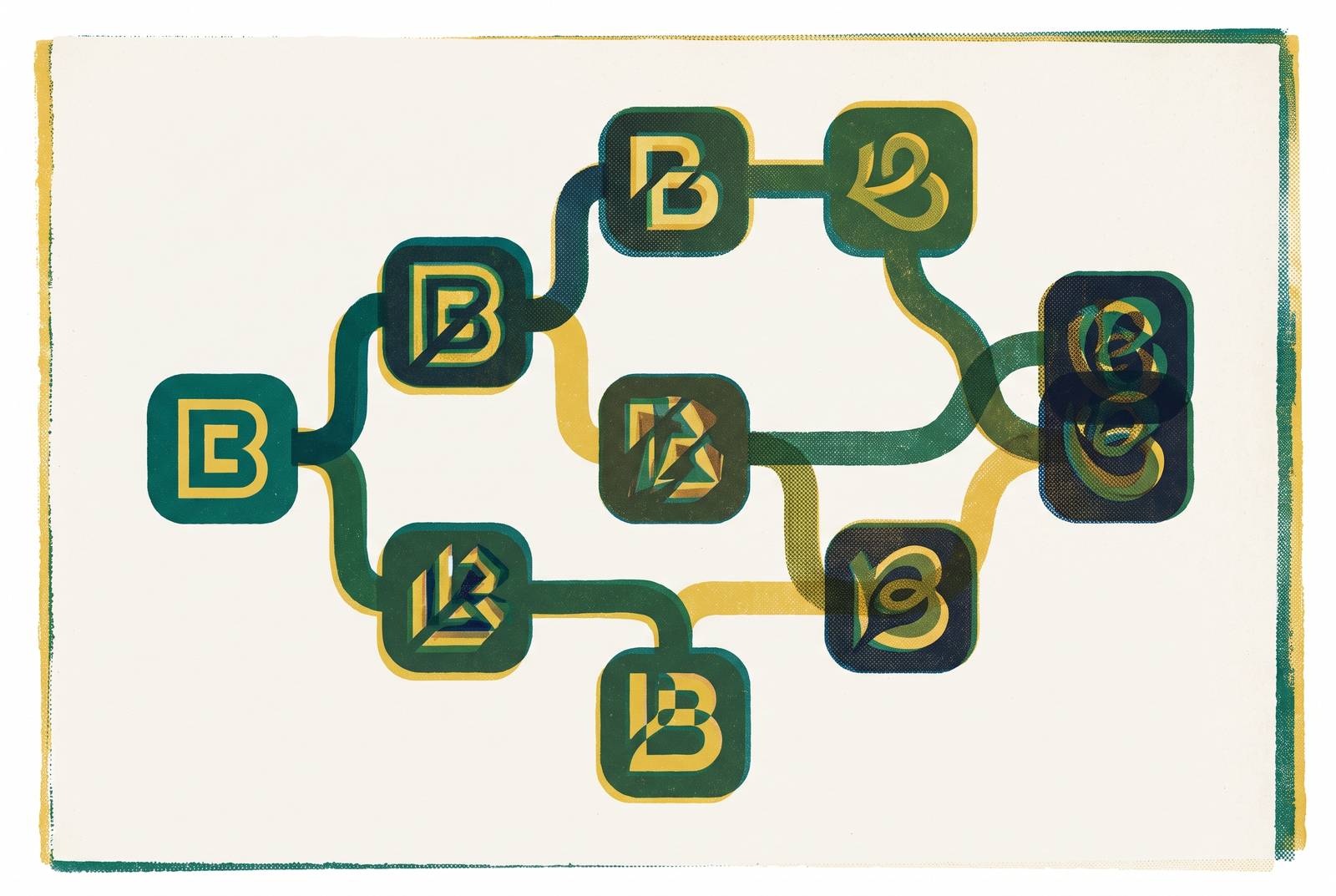
The brand layer for agents is a shared, machine-readable, versioned source of brand identity that agents consult before generating output. Versioning brand identity like a software release replaces frozen copies of guidelines with reviewed, testable updates distributed from one source. This is how teams keep multiple AI agents on brand without constantly re-prompting each one.
Why software-style versioning is becoming a brand team problem, not just a developer problem
Imagine every developer working from a different branch, with no merge, no diff, no release. That is the structure many brand teams now operate, with each agent receiving a separate copy of the identity it is supposed to represent. One works from an uploaded guide, while another uses instructions written for a given project. Those copies can diverge without anyone making a deliberate decision to change the brand. There is no coordinated release to bring them together.
In software, unversioned code produces integration failures and silent regressions. For brand teams, the same kind of failure occurs when output looks correct but follows an older rule or a local reading of it. Volume amplifies the problem. Agents can generate large quantities of material before a human notices that their visual or verbal choices have shifted. Updating the central document does not resolve that failure if the agents still work from separate snapshots.
The root cause is infrastructural. Agents can follow precise rules when those rules are available to them. What is missing is a supply chain for brand context, connecting an approved change to every agent expected to apply it.
What "agentic brand drift" is and why existing governance frameworks miss it
Agentic brand drift is the gradual divergence of AI-generated output from brand standards through small, accumulated visual and verbal deviations. It originates inside the production process rather than through a deliberate rebrand or a single conspicuous mistake. Each output may get most of the way there. Across many outputs, however, the remaining differences become a recurring need for manual rework, even though no individual change appears significant enough to trigger an intervention.
Performance metrics do not necessarily expose this divergence. An agent can do its assigned tasks well while straying from the identity it represents. Compliance audits and AI governance standards test how a system behaves, but meaning coherence needs a different test. An agent may operate within its permissions and still make choices that weaken the brand’s recognizable voice.
The familiar objection is that a brand review process already exists. Yet reviewing finished assets addresses drift downstream, after the generation process has produced it, and sometimes after publication. Versioned context moves control upstream by supplying the approved rules before generation begins. It gives review a defined standard and reduces the dependence on people repeatedly correcting the same preventable deviations.
Why static brand documents fail as machine inputs
A brand guide written for designers encodes decisions through explanation, examples, and intent. An agent needs those decisions in a form it can apply during generation. A PDF may describe a visual relationship persuasively without supplying the literal hex codes, type scale ratios, or spacing units required to reproduce it consistently. The mismatch is structural. Clearer prose does not by itself turn an explanation into an enforceable constraint.
“Warm but professional” leaves the agent to interpret the balance afresh, whereas “if channel=LinkedIn, tone=professional” expresses a conditional rule that can be applied as a parameter. The latter makes a specific decision explicit. Without that translation, separate agents can reasonably approximate the same description in different ways.
The practical test is whether a rule can become a prompt parameter, template variable, approval condition, or machine-readable constraint. If it cannot, it will not govern output consistently. The required shift is from brand-as-document to brand-as-data, using design tokens and logged decisions structured as JSON schemas that agents can ingest directly. Human explanation can preserve the reasoning, while structured data supplies the operational rule.
How software release discipline maps onto brand identity updates
A revised tone guideline becomes a versioned commit with a diff, a reviewer, and a deployment decision, rather than an edit that overwrites the previous instruction. The same applies to a logo update or a color token. The previous state remains identifiable. Testing and rollback become part of managing identity rather than emergency responses to inconsistent output.
Decagon’s Agent Versioning demonstrates this operating model in production agent management. Each workspace is an isolated environment, whether it is used for production, staging, or custom environments. Git-based version control tracks changes, while reviewable in-console diffs make those changes traceable and reversible. Audit logs, branch protections, and approval workflows provide the governance structure needed by regulated or distributed teams.
The experimentation layer makes release decisions measurable. Teams can compare CSAT, deflection, and conversation volume between production versions that share traffic windows. Those metrics show how controlled versions support comparison. Applied to brand identity, the model allows a proposed rule to be tested before production, rolled back if it underperforms, and retained in the record for accountability.
How can multiple AI agents access the same brand identity through MCP?
Model Context Protocol gives agents a way to get shared brand context. Its Resources primitive exposes read-only contextual data that connected agents can retrieve, including a structured brand token file. In a versioned brand system, agents read that resource before generation. The source becomes shared infrastructure. A server established for one agent can serve another agent team without recreating the brand context for each project.
Existing implementations make this approach concrete. Zeroheight offers a hosted remote MCP server through which agents can list documentation pages, read content, and retrieve assets, with release targeting and access governed by existing permissions. Webflow lets each site set Agent Instructions with rules and skills that can refer to design systems, CMS content, and voice and tone guidelines.
The system must serve the intended brand version, and connected agents must read it as part of generation for “one source of truth” to describe actual behavior. Security is equally necessary. Brand Resources are a potential prompt-injection surface because an attacker able to alter their content can place instructions where agents will read them, making access controls essential.
What a versioned brand update looks like end-to-end, from change to agent
Authoring starts with a data edit, such as a changed color token, voice constraint, or logo file pointer. The resulting diff shows the change in a form both humans and machines can read. Review then establishes who changed what and why before the update reaches a live agent. This is the approval boundary. A pull-request-style process can have few steps for a team that moves fast or stricter gates for one that works under regulations.
After approval, staging places the updated context in an isolated workspace for testing against simulated agent outputs. Measurement compares those outputs with outputs generated under the previous version. The comparison checks both performance and brand compliance, because an agent can finish a task well and still drift from the brand. The comparison tests the proposed change against a known baseline. It also creates a basis for deciding whether the new rules are ready for production.
Propagation completes the release when the approved version is promoted and connected agents read the incremented context through MCP or an API. In this workflow, retrieval is automatic rather than dependent on someone re-briefing each agent. That is the decisive difference from emailing a revised PDF. Authoring, review, staging, measurement, and propagation form one controlled path, so distributing the update is part of the system rather than a request that recipients remember to act.
Why agencies and multi-brand teams feel the versioning problem most acutely
An agency’s versioning problem multiplies across clients as well as agents. Each client has its own identity rules, tone guidelines, and approval thresholds, while each workflow adds another place where an old copy can linger. Managing these as separate unversioned documents is therefore an error-rate problem. More copies create more opportunities for divergence. The difficulty is knowing which rules were authoritative for each piece of work.
An agent can be adapted across accounts only if each account’s brand context is clean, current, and structurally distinct. Otherwise, stale or poorly separated context can bring one client’s rules into another client’s work.
The 4A’s 2026 outlook frames agencies as moving from campaign development toward organizational transformation, including AI operating models, ethical frameworks, adaptive organizational structures, and governance of autonomous brand agents. That role requires demonstrable accountability. A versioned context with an audit trail gives an agency a basis for explaining which client rules governed an output and how those rules were approved.
Reviewing AI-generated output against a versioned brand, not just a remembered one
A versioned brand source changes review from a comparison with remembered intent into a check against a defined standard. The review can identify that an output was generated against brand version 2.4 and show which elements do not match that version’s rules. Reviewers can distinguish a failure to follow the supplied rules from a disagreement with the rules themselves, which call for different corrections.
Canva AI 2.0, launched at Canva Create on April 16, 2026, is part of the move toward enforcing rules during generation. Its Brand Intelligence automatically uses brand fonts, colors, and styles from the first output, so those choices no longer fall entirely to later review. That illustrates the direction without establishing that generation-time enforcement replaces release history. The two do different jobs: structured rules help avoid corrections, and version records let teams check the work later.
ServiceNow’s AI Passport is a cryptographically signed runtime credential recording an agent’s identity, allowed actions, and accountable owner. Combined with versioned brand context, that kind of identity infrastructure makes it possible to examine not just the generated asset but the responsible agent and the rules under which it worked.
Brand legibility as a precondition for existing in agent-mediated commerce and discovery
Machine-readable identity is becoming an external requirement as agents increasingly mediate how consumers discover and engage with businesses. A brand represented only through human-readable documents risks being illegible to the systems acting on a consumer’s behalf. Internal consistency is only part of the issue. Agents also need to be able to get usable, current information about the brand when they make decisions that shape how people find and engage with a business.
Sierra and Meta announced the Personal Agent Protocol on October 6, 2026, with Walmart, Shopify, Stripe, Rocket, Genesys, and Instinct as founding partners. The open standard defines how agents authenticate and access businesses on a consumer’s behalf, while transactions and payments are deferred to a future version. That distinction limits what the announcement establishes today. It nevertheless shows that shared infrastructure for agent-to-business interaction is being built.
The objection that brand infrastructure can wait until agents mature overlooks that present development. A protocol for access does not itself supply a brand’s identity, and access alone does not make that identity legible. Brands still need context that is structured, up to date, and usable by agents. Establishing it now gives teams a foundation for participating as agent-mediated discovery and commerce expand, instead of leaving their identity trapped in documents the new infrastructure cannot reliably apply.