When Your AI Sounds Like Everyone Else's AI Fix Starts With Shared Context
Shared brand context that every AI agent can query stops generic drift.
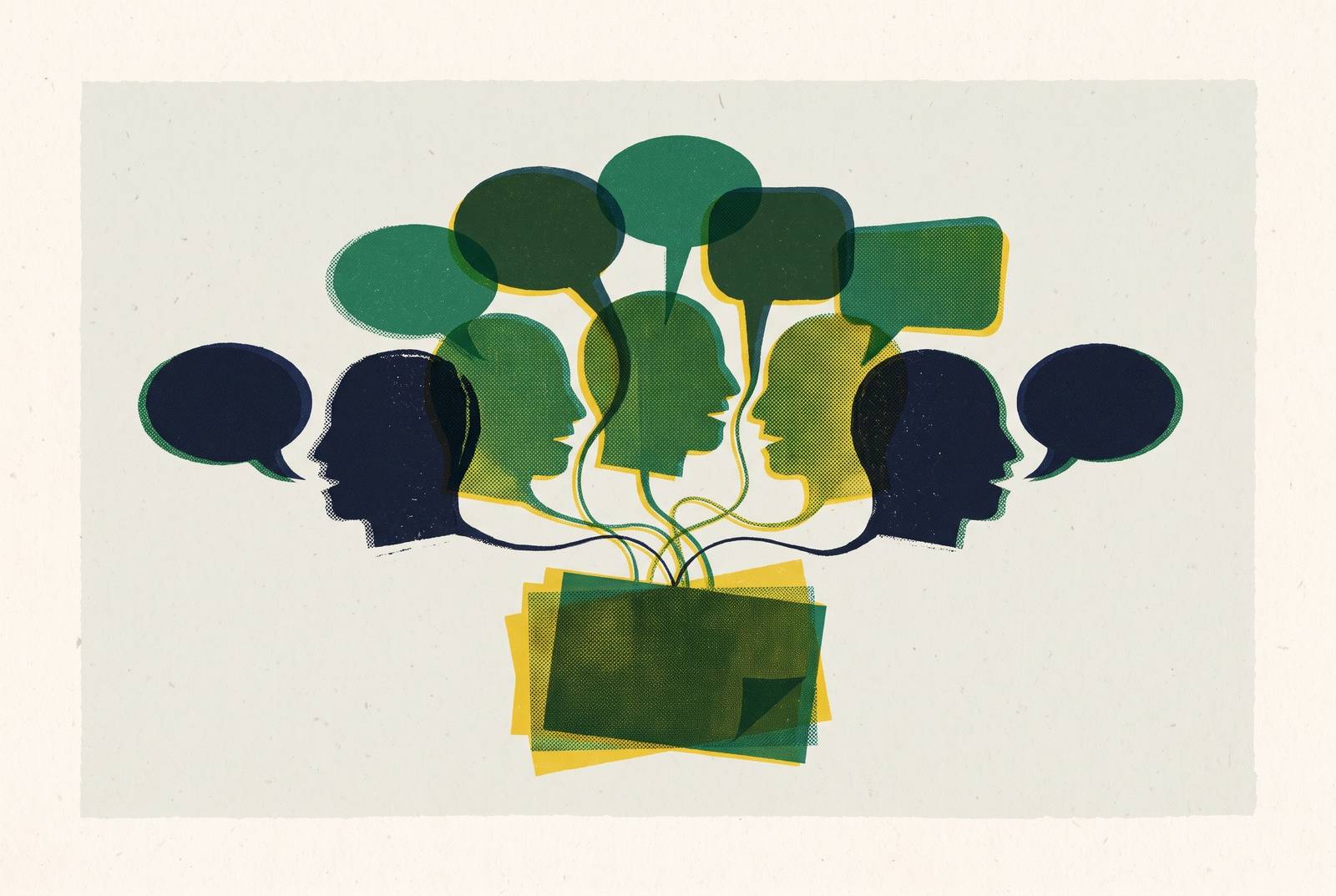
To detect when AI output drifts off-brand, check it against clear vocabulary, voice register, and visual rules, with evidence for each pass or fail. Preventing that drift requires generation and review to read from the same current brand source. When AI sounds like everyone else’s, shared brand context that every agent can query provides a durable fix.
Why AI output converges toward the same generic voice
A marketer reads an AI-drafted campaign and recognizes the assignment, but could not say which brand wrote it. The copy is fluent, relevant, and interchangeable. It meets the topic requirements without expressing a distinct point of view. That gap starts with how language models write text, by predicting a likely next token from a probability distribution shaped by their training data. Without specific brand context, the model draws on patterns across internet writing, books, academic papers, code repositories, and other sources.
Superside’s 2026 analysis describes off-the-shelf models as “brilliant at producing the average of everything and hopeless at producing the specificity of you”. Visual generation has the same underlying problem. A request for “a confident professional in a modern office” gives the model a scene, but no reason to produce something distinctive to the brand. Better prompts can narrow that range, yet they do not replace a stable source of brand knowledge. As different companies keep using similar tools without voice infrastructure, their outputs converge toward the same familiar language and imagery.
How the memory problem makes every generation start from zero
Even when a team produces something distinctive, a generic tool without persistent brand context does not make that success a repeatable standard. A designer might spend a Friday afternoon generating images and end up with five that can be used. Those references still have to be set up again in the next session. The output survives, but the working context does not. Superside’s analysis describes the reset directly, stating, “Once an image is generated, your brand is forgotten, wiped clean.”
For copy, this problem also appears within a session as instruction drift. Voice rules compete with the topic, content requirements, formatting, and length targets for the model’s attention. By the third or fourth paragraph, the writing can revert to generic, hedged prose even when the opening followed the requested register. A successful opening is therefore not enough. To keep the work consistent, brand context needs to stay at hand throughout the work, beyond its one appearance among many instructions.
Every reset means someone has to build that context again. The next person, tool, or agent cannot rely on context that existed only in someone else’s session. One person repeating that work loses time, but a team or agent pipeline repeating it simultaneously faces a structural problem. There is no shared memory from which consistent work can accumulate.
What happens when multiple agents and team members each start from their own version of the brand
A social media manager prompts Claude with one interpretation of the voice, while the sales team gives another tool a different set of instructions. A developer’s coding agent may never receive the brand context at all. Each workflow can appear reasonable in isolation. Across the company, however, those separate interpretations produce systematic fragmentation, with every added channel, market, and agent creating another place for the brand to diverge.
Shared prompt documents reduce some repetition, but they do not establish a dependable common source. People customize them, new hires miss them, and copies become stale. An update in one workflow does not propagate to another. In a five-agent pipeline, agent three may need context that agent one established in a transient session. The workflow has no stable place to retrieve what it needs.
AI allows generation to expand faster than a team’s capacity to review every asset manually, so fragmented context produces more work requiring correction. Even with better instructions for each tool, they still need a reference they can all share. That requires changing where brand knowledge lives and how each participant accesses it.
Why brand guidelines in their current form cannot bridge the gap
A traditional brand guide is written for people to make sense of an identity, while machines need precise operating rules they can look up. A sixty-page PDF may describe the voice as “warm but professional” and the visual style as “clean tech-forward”. Those phrases leave substantial room for interpretation. A designer reads them through shared cultural context, while a model fills the gaps with patterns associated with those words in its training data. Without examples, contrastive pairs, and explicit vocabulary rules, the model substitutes its defaults.
Uploading the guide gives the session a static snapshot. Someone still has to find the document, attach it, and replace the copy when it changes. Within a long session, its instructions also compete with the rest of the task.
Human reviewers then become the bridge between broad guidelines and specific outputs. They interpret the document, identify deviations, and return work for revision as content volume grows. That is a reasonable response to the tools available, but it leaves consistency dependent on repeated manual intervention.
What it means to treat brand context as infrastructure rather than a document
Brand infrastructure puts identity in a machine-readable form that every connected agent and tool can query and use as its source. A document answers questions when a person opens it. Infrastructure answers queries when an agent needs context before it makes a word or pixel. Reformatting a guide is insufficient if each tool still receives a separate copy that someone must maintain.
“Friendly tone” becomes vocabulary rules, examples of generic versus on-brand writing, and sentence-level register parameters. “Always use brand colors” becomes explicit hex values and proportions. These instructions constrain specific choices without asking the model to infer what an adjective means for this company. The brand becomes usable at the point of generation.
A structured layer holds a voice profile with examples and a vocabulary index, a visual identity reference with explicit rules, and a positioning document. The voice profile defines how the brand speaks, while positioning provides the basis for what it says. Visual rules guide the choice of imagery, color, and other parts of the identity. All are formatted for agents.
Because the source is shared, it can also be versioned. A brand change propagates to connected agents in the way a dependency update reaches the code that uses it, rather than requiring a search through scattered prompt documents. That changes the unit of maintenance. The team updates the brand source, and every connected workflow draws from the same current reference.
How MCP delivers shared brand context to every agent that needs it
MCP gives compatible agents a way to query live brand context before generating output. An MCP server exposes voice rules, visual identity, positioning, and explicit do’s and don’ts as a source that tools can consult in real time. The brand no longer depends on a pasted reminder. Instead, the workflow retrieves the relevant context before the model begins producing the asset.
For a marketer, the practical difference is that the agent has current brand knowledge before starting the assignment. A changed color system or new campaign voice is available through the same shared source, without anyone having to send out a new prompt document. Connected agents pick up the update when they query that source. This turns context retrieval from a team convention into part of the workflow itself. People no longer need to remember which version of the guide belongs in which tool.
The protocol supplies access. Its usefulness therefore depends on the structured context exposed through it and on agents querying that context before generation. With only vague adjectives to query, the model would still have to work out what they mean. MCP makes the infrastructure usable across compatible tools, while the precision of the source determines what those tools have to work with.
What a brief-driven workflow looks like when agents share the same brand context
For a campaign image, the agent begins with the assignment and queries the shared source for the rules relevant to that work. The resulting brief covers the applicable logo, type, colors, imagery, and voice requirements. It is specific to the task. The brief has already worked out how the rules apply to the asset, so the model has less to weigh up between a full brand guide and a campaign request.
The image brief gets its visual rules from the identity reference, while any copy that goes with it gets its vocabulary and register from the voice profile. Positioning supplies the relevant direction for the message. An email or web page follows the same pattern, with the brief selecting the context its output requires.
After generation, the asset can be reviewed against the same source that informed the brief. No one has to reconstruct the brand between those stages. The human task shifts from repeatedly editing generic drafts back toward the brand to reviewing the result for accuracy and polish, while checking that the rules were followed.
How to detect when AI output drifts off-brand before it ships
Off-brand signals become useful when they name a deviation from an explicit rule. Copy can depart from approved vocabulary, a headline can miss the required voice register, and an image can use the wrong color proportions. Each signal needs a reference. A reviewer’s sense that an asset “does not feel right” may identify a concern, but it does not explain which requirement the output failed.
An audit checks the output against each rule that applies in the shared brand source and records a pass or fail with evidence to back it up. The vocabulary check compares the copy with the approved vocabulary rules. The register check compares the headline or passage with the voice parameters and examples. The visual check compares the asset with the specified color proportions and identity rules. This provides a concrete review method without reducing different types of deviation to an unexplained overall score.
Because generation and review use the same reference, disagreements can be resolved against the stated requirement. Evidence makes the decision easier to explain. It also keeps review focused on the output instead of reopening what the brand is supposed to mean. Over time, the record of what passes and fails can feed back into the context layer, helping it reflect actual output patterns rather than remaining a document written once and forgotten.
What brand context as infrastructure actually requires a team to do
The team should begin by converting brand identity into instructions precise enough for machines to use. A team making this shift should use specific examples to show voice attributes, clear do’s and don’ts to spell out vocabulary rules, and approved claims to set out positioning. Visual identity needs exact proportions and references. Contrasting generic and on-brand versions of the same content helps remove the gap between a brand’s description of itself and a model’s interpretation.
The next step is to connect the agents that need that context. Tools such as Claude, Cursor, and Codex can connect over MCP, while products a team builds can use an API. Each workflow should query the shared source so it can work from more than its own incomplete copy. Generation and review then use the same standard. The team maintains the versioned source as the brand changes, with updates reaching connected agents instead of requiring edits across individual prompt documents.
This is a one-time infrastructure decision. The ongoing work belongs in the shared context layer, where a change can serve every connected workflow. It no longer belongs in the repeated reconstruction of prompts.